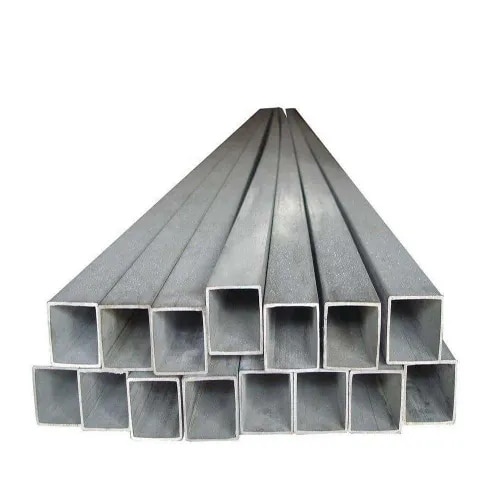
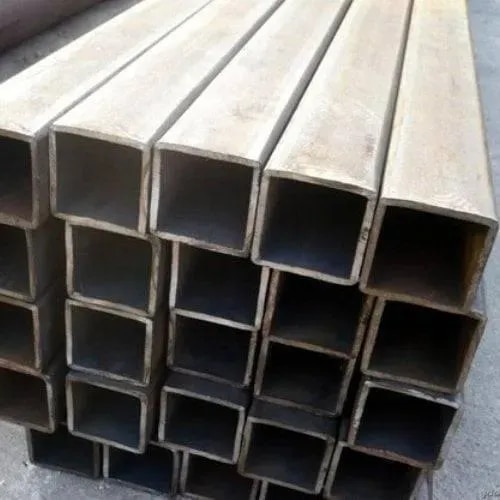
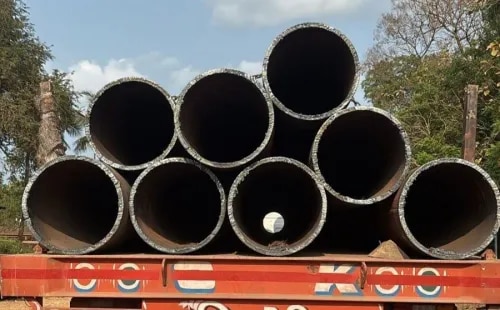
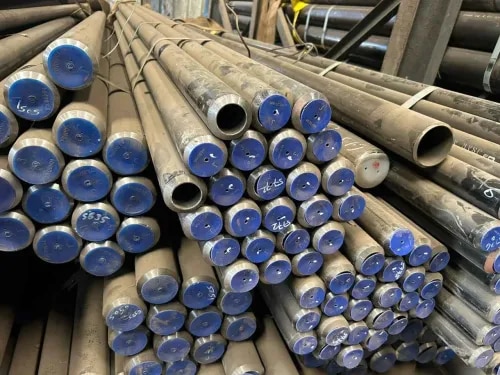
Piping Material Supplier for Industrial and Infrastructure Projects
A pipe that matches the nominal size can still fail the project if its grade, wall thickness, end preparation, coating, or certification does not match the service. By the end, you will be able to define the duty, compare pipe materials and manufacturing routes, write a complete purchase specification, and check supplied material before installation.
Key takeaways
- Match pipe material to pressure, temperature, fluid, corrosion, and structural loads.
- Specify grade, wall thickness, outside diameter, ends, length, and standard.
- Confirm coating and galvanizing requirements before fabrication or installation.
- Check heat numbers, test certificates, dimensions, and traceability at receipt.
Define the Service Before Choosing the Pipe
A pipe is suitable only when its material, wall, joints, and protection match the service and site. Piping material selection must start with design pressure, temperature, fluid service, corrosion exposure, soil conditions, and structural loads—not with “carbon steel” or “Schedule 40” alone.
Confirm these inputs before requesting a quotation:
- State the design pressure and pressure rating, including surge, vacuum, and the governing code. Schedule identifies a…