Choosing a steel pipe is a design and purchasing decision, not a search for the lowest quoted size. By the end, you will be able to match material and construction to the service, specify dimensions without ambiguity, compare supplier documents, and avoid costly errors in fabrication, testing, and delivery.
Key takeaways
- Use GI for compatible atmospheric exposure, not hot, abrasive, or aggressive chemical service.
- Specify nominal size, wall thickness, service conditions, and the governing pipe standard.
- Confirm mill certificates, heat numbers, quantities, and delivery condition before dispatch.
- Separate dissimilar metals and protect pipe ends, coatings, and interiors during storage.
Match the steel to the job: GI, MS, carbon steel, or alloy steel
Choose GI pipe when the zinc coating can protect against atmospheric moisture and the service is not hot, highly abrasive, or chemically aggressive. Galvanizing is not a substitute for selecting a compatible material: damaged coating, trapped water, or contact with dissimilar metals can still cause corrosion.
MS pipe and mild steel pipe usually refer to low-carbon steel used for general fabrication, supports, handrails, gates, frames, and non-critical utility lines. A hollow section may suit a frame better than pipe because its dimensions and design basis differ. Confirm whether the project needs a structural section or fluid-conveyance pipe.
| Material | What it offers | Suitable application |
|---|---|---|
| GI pipe | Zinc-coated corrosion protection | Outdoor water lines, scaffolding, and exposed utility work where temperature and chemistry are moderate |
| MS or carbon steel | Low cost, weldability, and broad availability | Fabrication, structural work, air or water service, and carbon steel pipe uses in general industrial piping |
| Alloy steel | Improved strength, toughness, heat or corrosion resistance by grade | Elevated-temperature lines, high-pressure service, wear duty, or specified corrosive environments |
Do not choose from the material name alone. Provide the following before ordering:
- Fluid, pressure, operating temperature, corrosion exposure, and required service life
- Nominal bore or outside diameter, wall thickness or schedule, length, end type, and quantity
- Governing standard and grade, such as ASTM A53 for general service or seamless ASTM A106 for high-temperature service
- Sour-service requirements under ISO 15156 or NACE MR0175 when hydrogen sulfide is present
A higher schedule is not automatically a pressure rating; design temperature, grade, tolerance, corrosion allowance, and code determine allowable pressure.
Specify size, wall thickness, service conditions, and the correct standard
NPS 2 is not a 2-inch outside diameter: its outside diameter is 2.375 inches, while the schedule changes the wall thickness and generally leaves the outside diameter fixed. Give the nominal pipe size, schedule or wall thickness, grade, and length; add the inside diameter when flow or clearance matters.
“Two-inch pipe” alone is an informal size match, not a purchase specification.
Send the supplier a written line item containing:
- Nominal pipe size or measured outside diameter, plus inside diameter where the bore is critical.
- Wall thickness or schedule, with the required tolerance if the design specifies one.
- Material grade and product standard: ASTM A53 covers general-service welded or seamless carbon-steel pipe; ASTM A106 covers seamless carbon-steel pipe for high-temperature service.
- Design pressure, operating temperature, fluid, corrosion or erosion allowance, and any external load.
- Fixed or random length, total quantity, end preparation, and joining method.
- Dimensional standard: ASME B36.10M or ASME B36.19M, as applicable to the pipe.
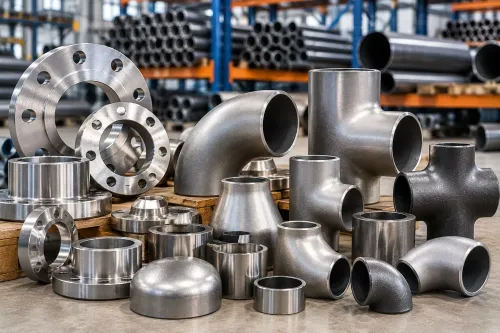
Check connected components separately. ASME B16.9 controls factory-made butt-welding fittings, while ASME B16.5 covers many flanges and flanged fittings; nominal size alone does not confirm bore, wall transition, facing, pressure class, or fit-up.
A higher schedule is not automatically a pressure rating: grade, temperature, thickness tolerance, weld efficiency, allowances, and the design code determine allowable pressure.
Choose ERW, welded, or seamless construction—and plan fabrication around galvanizing
ERW pipe is often the economical choice for construction and utility service, while seamless pipe earns its cost when the specification demands high-temperature service, severe forming, or demanding pressure conditions. Construction type affects forming, joining, inspection, and price; the word “seamless” alone does not prove better performance.
| Option | What it means | When it applies |
|---|---|---|
| ERW pipe | Electric-resistance-welded strip with a longitudinal seam | General service, structural work, and pressure applications covered by the specified product standard |
| Welded pipe | Pipe made by a welded process, including ERW or other longitudinal and spiral methods | Large diameters, fabrication, and applications where the standard permits a welded product |
| Seamless pipe | Tube formed without a longitudinal weld | High-temperature service or a design specification requiring seamless construction |
Do not substitute ASTM A106 for ASTM A53 because it is available. ASTM A53 covers welded and seamless carbon-steel pipe for general service; ASTM A106 covers seamless carbon-steel pipe for high-temperature service. ASTM A500 structural tubing is a separate category for frames and hollow sections, not a default pressure-pipe substitute.
Galvanizing changes fabrication order. For galvanized pipe welding, remove zinc from the weld zone, provide fume extraction, and repair the damaged coating with an approved zinc-rich system after inspection. Welding coated pipe without controls creates hazardous fumes, porosity, poor visibility, and exposed steel at the joint.
Price the extra handling, coating repair, threading, cutting, and inspection before choosing galvanized pipe. Keep carbon-steel bundles dry and off the ground; trapped condensation causes rust beneath markings and at weld preparations.
Check supplier documents, traceability, quantity, and delivery condition
Compare a steel pipe supplier on evidence, not the lowest quoted rate. Require the purchase order, packing list, markings, and delivered pipes to agree on standard, grade, outside diameter or nominal bore, wall thickness, length, quantity, and finish.
A pipe described only as “API 5L” is incomplete: record PSL 1 or PSL 2, grade, delivery condition, and product options.
| Certificate | Evidence provided | How to use it |
|---|---|---|
| EN 10204 3.1 certificate | Manufacturer’s conformity statement with test results for the supplied material | Match its heat number, grade, dimensions, chemistry, tensile and yield results, elongation, impact results where specified, and test status to the pipes |
| EN 10204 3.2 certificate | 3.1 evidence plus validation by the purchaser’s authorised representative or official inspector | Use when the contract or risk level requires independent witnessing |
| Generic certificate of conformity | Broad declaration without equivalent product-specific test evidence | Do not treat it as a 3.1 or 3.2 certificate |
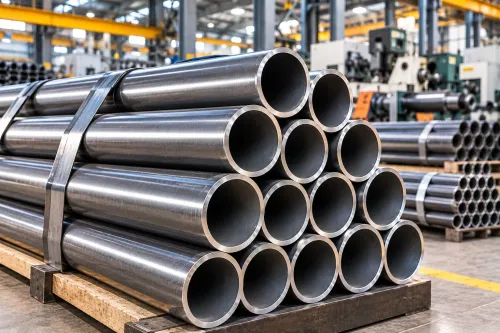
At receipt, count bundles and individual lengths against the packing list, then inspect random lengths for dents, ovality, corrosion, damaged ends, coating loss, and missing markings. Verify heat or cast numbers remain legible and appear on the mill test certificate (MTC).
If stock was cut, require heat numbers transferred to every piece; unmarked remnants can lose their traceability.
- Reject or quarantine material with unexplained shortages, mixed grades, broken bundles, or certificate-to-marking mismatches.
- Record fixed lengths, random lengths, cut pieces, and short remnants separately because they affect yield and fabrication.
- Ask Vikram And Company to state these quantities and traceability arrangements on the quotation, so competing offers compare usable material rather than nominal tonnage.
Related products
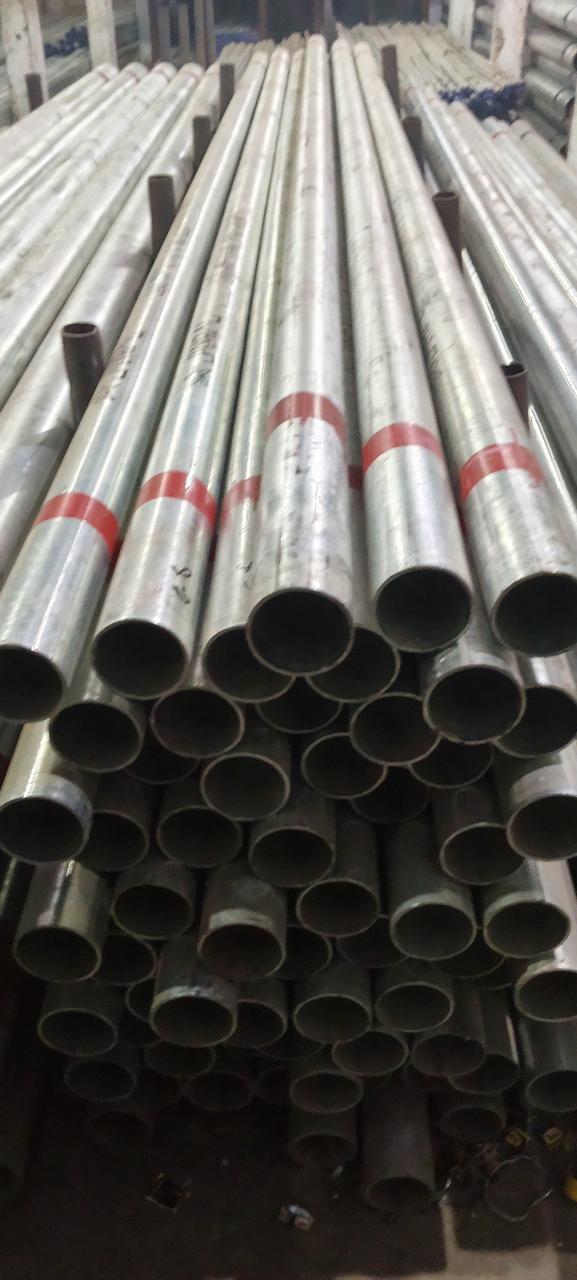 | GI Pipes We supply GI round pipes as part of our range of galvanized iron piping solutions for industrial and project requirements. View product → |
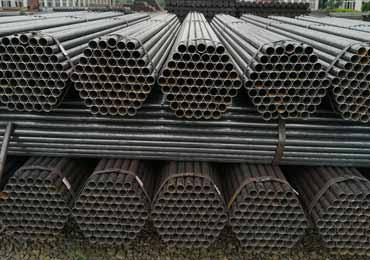 | MS Pipes We supply mild steel round pipes for industrial and project-related sourcing requirements. View product → |
Protect compatibility from fit-up through pressure testing and site storage
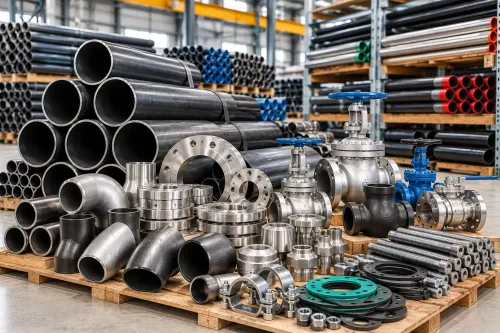
A nominal size match is not enough at fit-up. Compare the pipe dimensions in ASME B36.10M or ASME B36.19M with the pipe fittings standards for the components being joined: ASME B16.9 for butt-welding fittings and ASME B16.5 for many flanges and flanged fittings.
Check outside diameter, wall transition, bore, flange facing, pressure class, and weld-end preparation before cutting.
Use these fabrication checks before closing a joint:
- Confirm every pipe, elbow, reducer, tee, and flange against its drawing and heat traceability.
- Measure bevel angle, root face, alignment, and internal mismatch; do not force an offset into position.
- Verify gasket type, bolt size, flange rating, and valve end dimensions.
- Preserve the heat or cast number when cutting pipe into shorter lengths.
A mill or stockist hydrostatic test proves the supplied pipe met its product-standard test requirement. It does not replace the completed-system pressure or leak test: fabrication welds, field joints, valves, supports, and installed components still need testing under the project piping code and approved procedure.
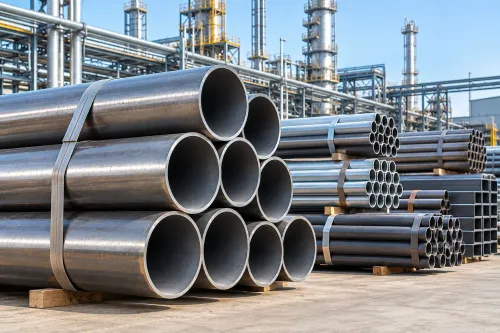
Prevent storage damage after inspection. Cap open ends, keep pipe off the ground on stable supports, and use a cover that sheds rain while allowing ventilation. Separate carbon steel from stainless steel, remove standing water, and inspect for coating damage, dents, corrosion, and blocked bores before installation.
Recheck dimensions after storage if lifting, impact, or prolonged exposure could have changed the fit.
Frequently asked questions
When should you choose GI, MS, carbon steel, or alloy steel pipe?
Choose GI when zinc protection suits atmospheric moisture and the service is not hot, highly abrasive, or chemically aggressive. Select MS, carbon steel, or alloy steel according to strength, temperature, corrosion, and service requirements.
What information must a steel pipe specification include?
State the nominal size, wall thickness, service conditions, quantity, and correct product standard. Include pressure, temperature, corrosion, and fabrication requirements where they affect selection.
How do ERW, welded, and seamless steel pipes differ?
ERW and other welded pipes use a formed plate or strip with a welded seam. Seamless pipe has no longitudinal weld and suits specifications that require it. Match construction to the applicable standard, service, pressure, and fabrication method.
What supplier documents should you check before accepting steel pipes?
Check the purchase specification, manufacturer or mill test certificate, heat number, grade, dimensions, standard, quantity, and inspection records. Compare markings and delivered condition with the documents.
How should steel pipes be protected during fabrication, testing, and storage?
Prevent coating damage, isolate dissimilar metals, keep water from trapped joints, protect pipe ends, and store pipes off the ground with drainage. Check fit-up and maintain compatibility before pressure testing.
Related products
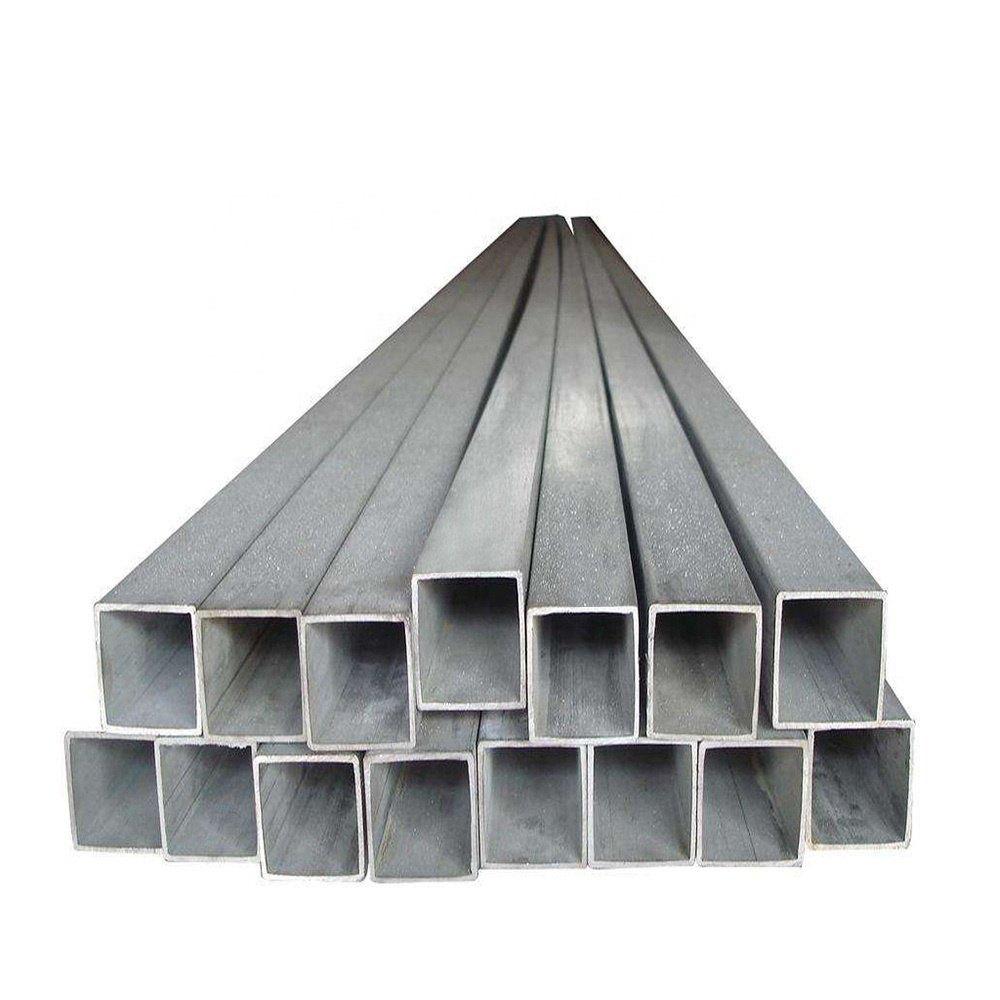 | GI Pipes We supply GI square pipes as part of our galvanized iron pipe range for businesses seeking dependable industrial piping solutions. View product → |
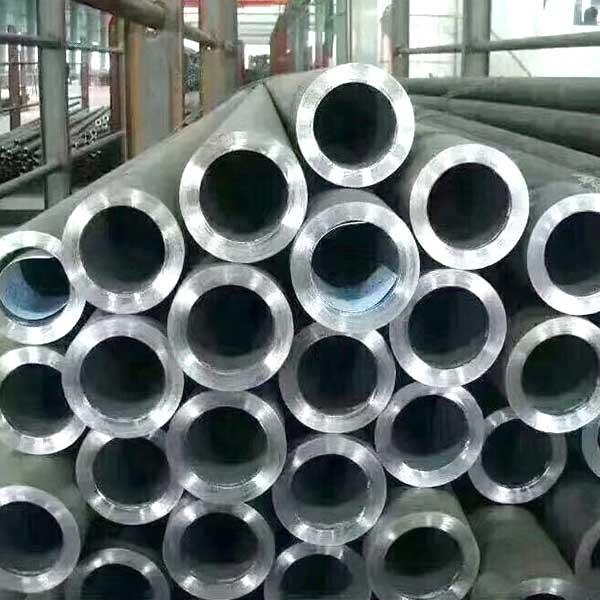 | Alloy Steel Pipes & Products We supply alloy steel pipes as part of our alloy steel product range for industrial and project sourcing requirements. View product → |
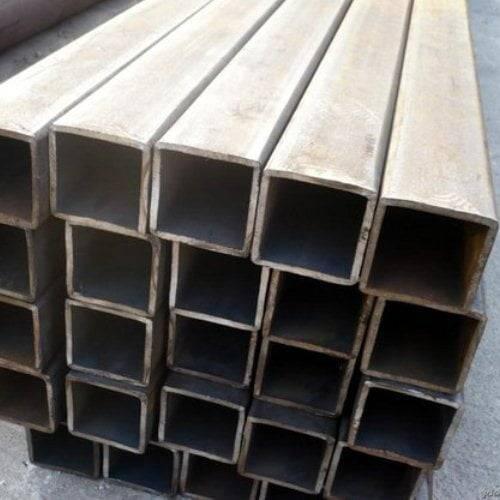 | MS Pipes We supply mild steel square pipes as part of our MS piping range for industrial, commercial, and project sourcing requirements. View product → |
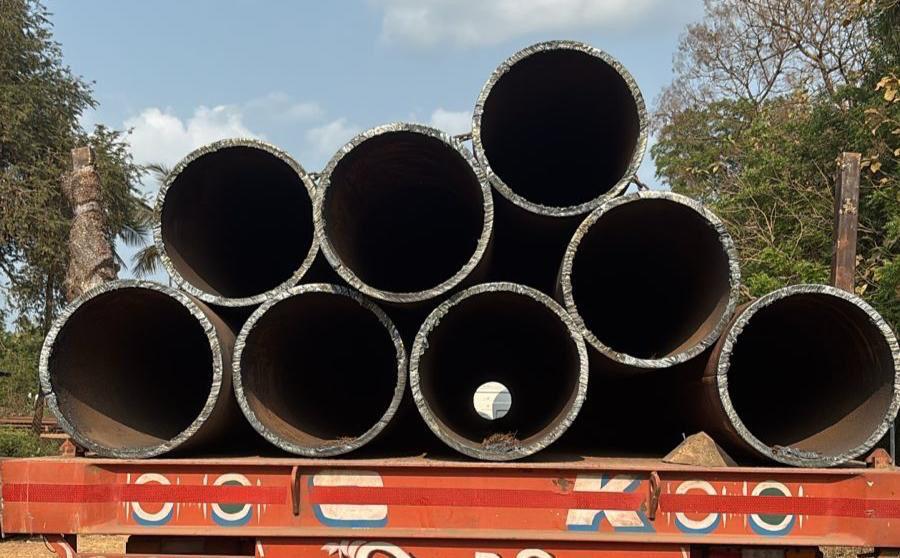 | Seamless Pipes We supply MS/CS seamless pipes for customers seeking seamless pipe solutions for industrial and project requirements. View product → |