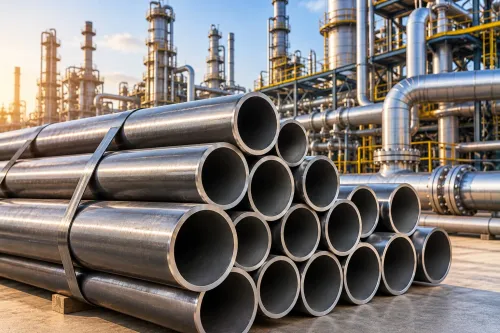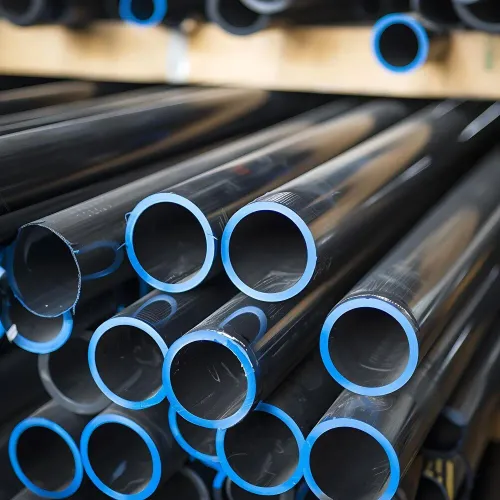
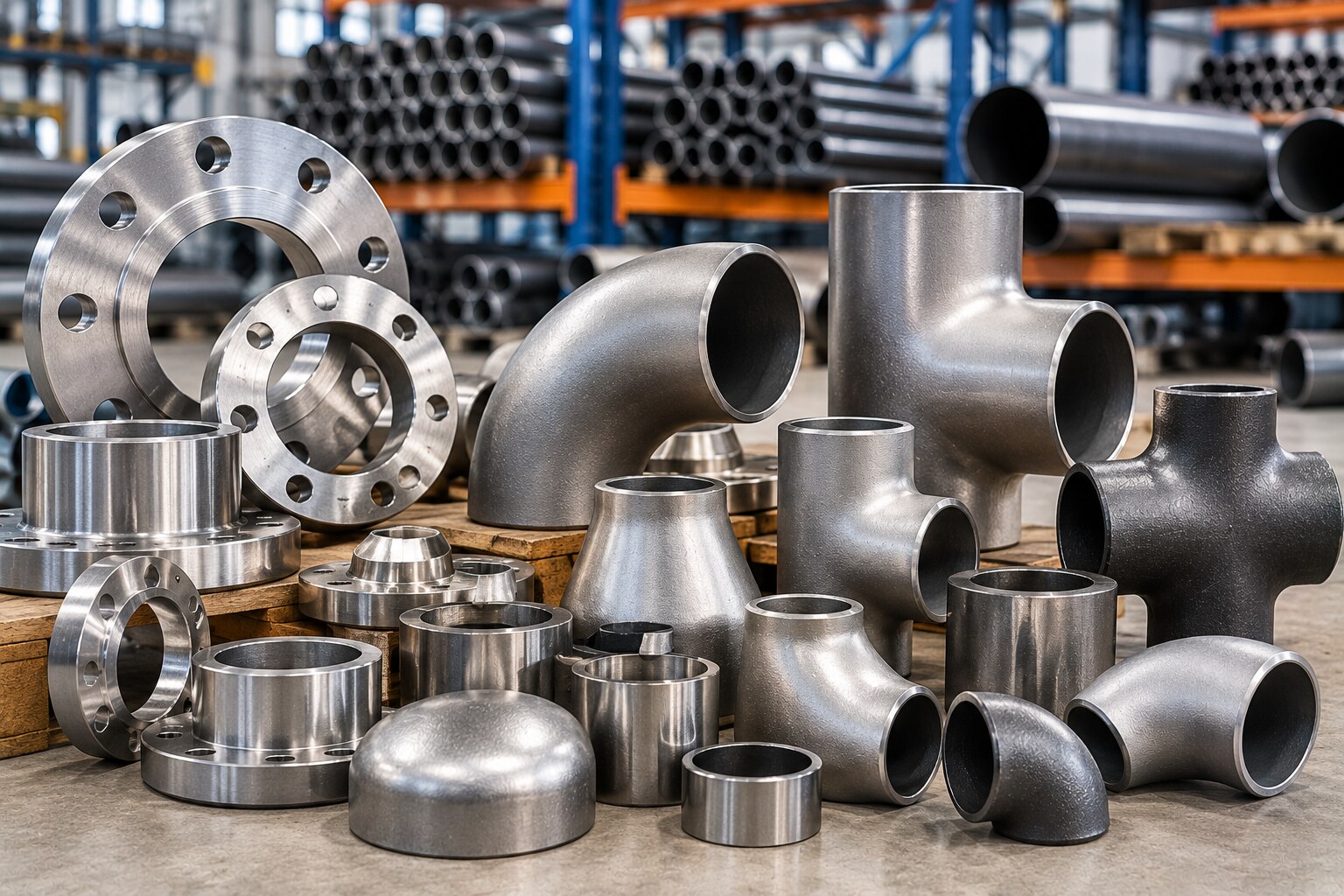
A piping system fails at its connections when fittings do not match the pipe’s size, wall, pressure-temperature duty, material, or installation method. By the end, you will be able to plan the route, specify each fitting, compare connection and material options, and check whether a supplier’s delivered documents and markings support the job.
Key takeaways
- Match each fitting to pipe outside diameter, wall schedule, and pressure class.
- Choose welded, threaded, flanged, or grooved connections for the service and maintenance plan.
- Request material certificates, dimensional checks, and pressure-test records before ordering.
- Inspect alignment, joint preparation, torque, and support placement before commissioning.
How fittings complete an industrial piping route
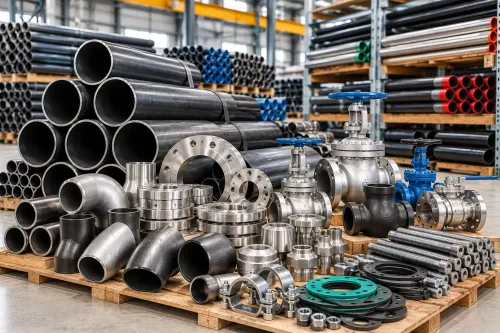
An industrial piping system needs pipe fittings wherever the route changes direction, branches, changes size, joins sections, or ends. Place each fitting from the process layout, flow direction, maintenance access, and support plan—not wherever a straight pipe happens to finish.
- Elbows turn the route; specify the bend angle and radius because a short-radius elbow creates more pressure loss and flow disturbance than a long-radius elbow.
- Tees create one branch from a main line; crosses create two branches and four connected openings.
- Reducers change pipe size; place them where the flow transition is required and leave room for supports and instruments.
- Couplings join aligned pipe sections, while unions provide a removable joint for equipment or maintenance.
- Flanges connect removable pipe, valves, pumps, and vessels; position them where bolt access and gasket replacement are possible.
- Caps close a pipe end; plugs close a threaded or socket opening.
Plan elbows around pumps, meters, valves, and vessel nozzles without forcing misalignment. A crowded bend beside a meter can disturb readings, while an unsupported heavy valve can load the fitting and crack a joint.
Reserve low points for drains and high points for vents where the process requires them. Put tees at the actual branch take-off, reducers after the branch if each line needs a different size, and removable connections beside equipment.
Before ordering, map every fitting to its pipe’s NPS, outside diameter, wall thickness or schedule, connection type, and material grade. A fitting with the same nominal size can still have incompatible weld ends, threads, or dimensions.
How to specify fitting size, schedule, pressure class, and standard
State the nominal pipe size, outside diameter, wall thickness or pipe schedule, connection type, material grade, governing standard, and pressure class on every fitting purchase specification. Do not treat schedule 40 or schedule 80 as a pressure rating: the actual wall thickness changes with nominal pipe size, while pressure class belongs to fittings and flanges.
| Specification field | What to state | Why it matters |
|---|---|---|
| Nominal size | NPS, such as NPS 4 | Identifies the intended pipe size |
| Dimensions | Outside diameter, wall thickness, pipe schedule, and end dimensions | Prevents a nominally similar fitting from mismatching the pipe |
| Pressure | ASME class, design pressure, and design temperature | A Class 300 flange is not automatically suitable for 300 psi service at every temperature |
| Standard | ASME B16.9 for wrought butt-weld fittings or ASME B16.5 for flanges | “ANSI” alone does not identify the governing dimensions and limits |
| Material | Exact grade, such as ASTM A234 WPB, plus impact or heat-treatment requirements when specified | Confirms strength, weldability, preheat, and PWHT compatibility |
For butt-weld fittings, compare the weld-end wall, bevel, tolerances, and outside diameter with the pipe standard; do not infer suitability from NPS alone. Metric-diameter pipe and special wall tolerances can make a same-size fitting unusable. For flanges, add facing and finish, gasket type and material, bolting grade, and the tightening procedure.
A matching nominal size and class will not rescue an incompatible gasket, flange face, bolt set, or temperature rating.
Which connection type and fitting material suit the service?
Choose the connection by service conditions, access, movement, and maintenance—not by installation speed alone. A removable joint can save shutdown time, while a permanent weld removes gasket and bolt-maintenance points.
| Option | What it means | When it applies |
|---|---|---|
| Threaded fittings | Tapered or parallel threads form the joint | Low-to-moderate pressure utilities and smaller diameters; avoid where vibration, thermal cycling, or thread corrosion threatens sealing |
| Socket-weld fittings | Pipe enters a forged socket and receives a fillet weld | Small-bore, higher-pressure lines; ASME B16.11 Class 3000, 6000, and 9000 are fitting designations, not the pipe’s pressure calculation |
| Butt-weld fittings | Matching bevelled ends receive a full-penetration weld | Larger or critical lines; ASME B16.9 fittings must match pipe outside diameter, wall, bevel, and tolerance |
| Flanged connections | Bolted faces compress a gasket | Equipment nozzles, valves, inspection points, and lines needing frequent removal; check pressure class against design temperature |
| Grooved connections | A groove and coupling grip the pipe ends | Fire-water and maintenance-sensitive systems; confirm coupling rating, gasket compatibility, and movement allowance |
| Compression connections | A ferrule seals onto the tube | Clean, small-bore instrumentation or utility tubing; reject it where vibration can loosen the joint |
Compare the actual steel grade, not merely “carbon” or “stainless.” Carbon and low-alloy fittings must suit the pipe’s weldability, preheat, consumable, and post-weld heat-treatment requirements.
| Material | Selection point |
|---|---|
| Carbon steel | Economical for general water, air, oil, and process service |
| Low-alloy steel | Higher-temperature or strength-demanding service; verify alloy matching and PWHT |
| Stainless steel | Corrosive service; segregate it from carbon-steel dust, racks, brushes, and lifting gear to prevent surface contamination |
How to evaluate a pipe fittings supplier before ordering
A quotation that says “ANSI fittings” is incomplete. Require the exact standard: ASME B16.9 for factory-made butt-welding fittings, ASME B16.11 for forged socket-weld or threaded fittings, and ASME B16.5 for flanges. It must also state NPS, schedule or wall thickness, outside diameter where relevant, material grade, connection, quantity, end preparation, and inspection documents.
1. Compare the quoted dimensions with your pipe. Do not treat schedule 40 as a flange pressure class, or Class 300 as a universal 300 psi rating; ASME B16.5 flange capacity changes with material group and design temperature.
2. Request the material test report and trace it to the goods. An EN 10204 Type 3.1 certificate identifies testing for the supplied products; a generic conformity certificate does not. The heat or cast number on the report must match the fitting.
3. Check marking before unloading. Each fitting should show identifiable size, grade, standard or class where applicable, manufacturer mark, and heat number. Require controlled transfer of heat numbers to cut pieces and remnants.
4. Inspect the delivered fittings against the order. Verify count, NPS, wall or schedule, flange class, bore, face condition, thread form, bevel angle, and visible dents, cracks, corrosion, or distortion. Reject a fitting whose marking is missing or whose dimensions cannot be reconciled with its certificate.
Give Vikram And Company this same traceability checklist when requesting pipe and fitting packages; it separates a comparable quotation from a catalogue description. A supplier who cannot confirm these details before dispatch creates inspection delays and leaves you responsible for proving what arrived.
Related products
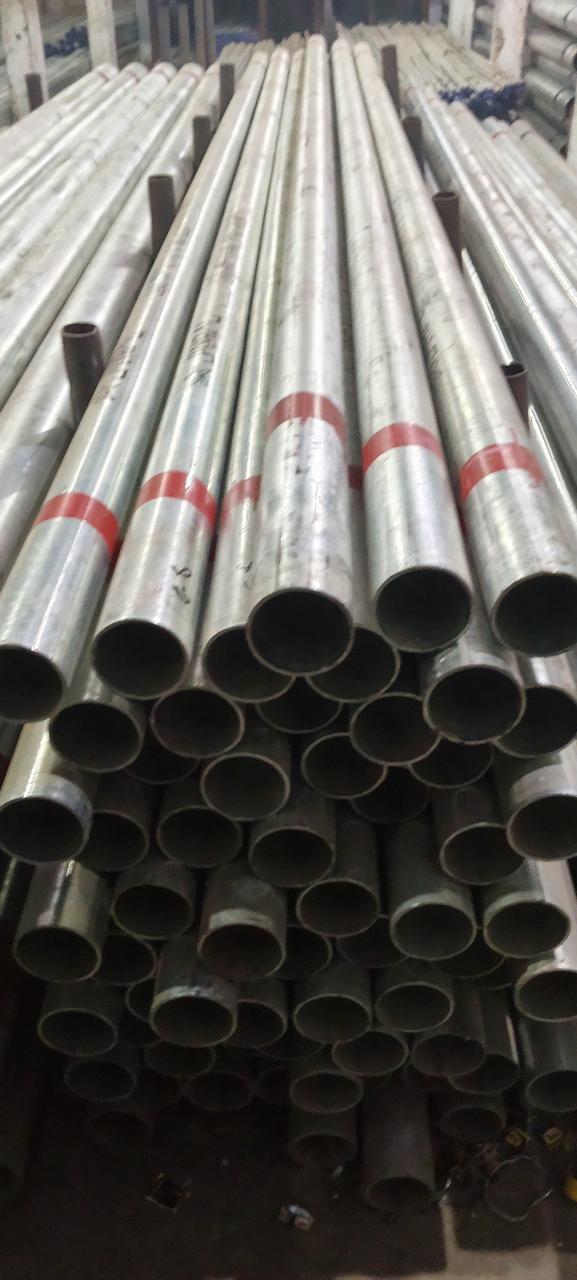 | GI Pipes We supply GI round pipes as part of our range of galvanized iron piping solutions for industrial and project requirements. View product → |
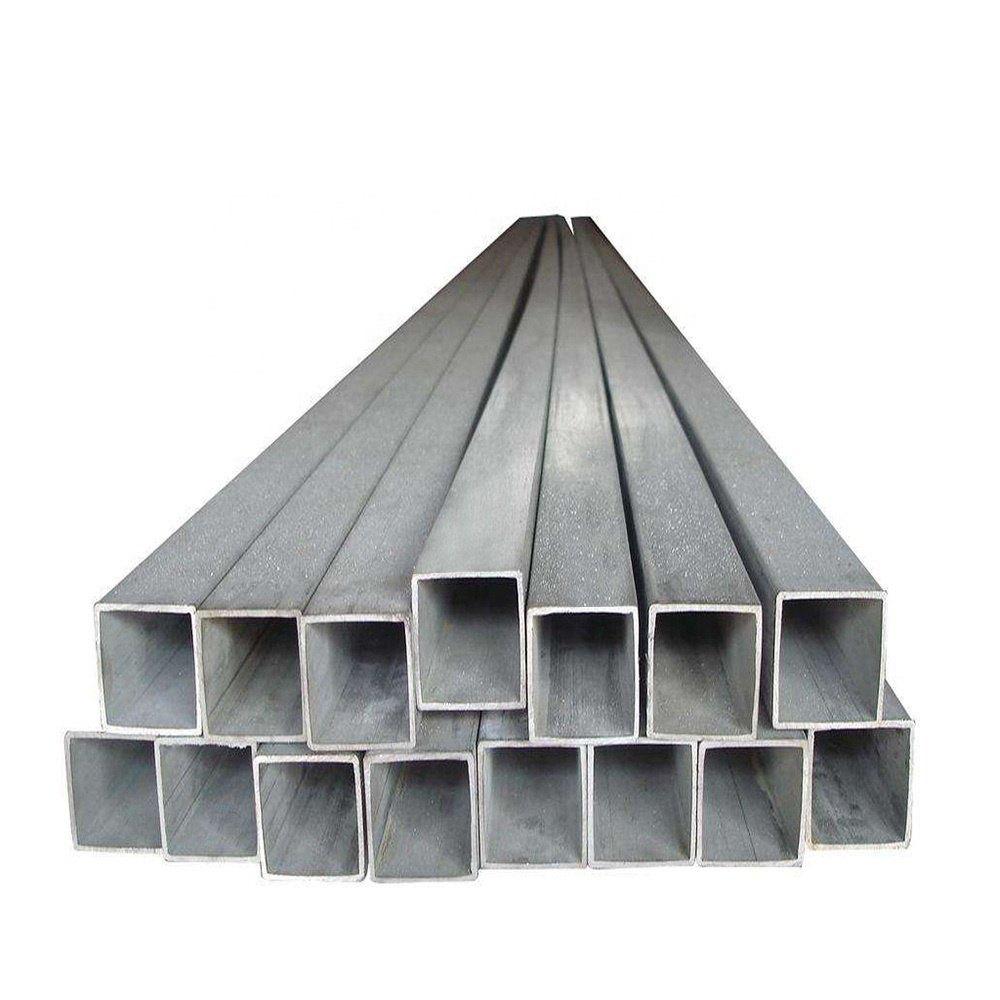 | GI Pipes We supply GI square pipes as part of our galvanized iron pipe range for businesses seeking dependable industrial piping solutions. View product → |
How to prevent fitting and installation failures
A leak-free installation starts with dimensional, material, and alignment checks before assembly. Inspect every joint for damage, clean sealing surfaces, and confirm that the fitting matches the pipe’s outside diameter, wall thickness, connection standard, and service conditions.
| Check | Verify | Failure prevented |
|---|---|---|
| Elbows | Use a long-radius elbow where the design requires lower pressure loss, metering stability, or reduced erosion | Excess pump energy, turbulence, and wear |
| Threads | Confirm BSP and NPT threads are never mixed; inspect thread engagement and sealant compatibility | Cross-threading and persistent leaks |
| Reducer orientation | Install an eccentric reducer with its flat side positioned as the drainage or venting design requires | Air pockets, liquid hold-up, and cavitation |
| Supports | Place pipe supports near heavy valves, flanges, elbows, and reducers without forcing the pipe into alignment | Joint loads, vibration, and cracked fittings |
- Match butt-weld fittings to the pipe’s actual outside diameter, wall, bevel, and tolerance. The same nominal size does not prove compatibility.
- Confirm fitting and pipe grades are weldable together. Check the approved welding procedure for preheat, consumable type, carbon-equivalent limits, interpass temperature, and post-weld heat treatment. A strong-looking weld can still fail from an unsuitable alloy combination.
- Check flange face type, bolt pattern, gasket, material group, pressure class, and design temperature. Class 300 is not a universal 300 psi rating; allowable pressure falls as temperature rises.
- Inspect completed welds for alignment, root penetration, undercut, porosity, and slag. For socket-weld and threaded forged fittings, confirm ASME B16.11 Class 3000, 6000, or 9000 markings without treating that class as the pipe’s pressure calculation.
- Flush debris before commissioning and pressure-test the completed section at the specified test pressure. Foreign material damages seats, blocks small passages, and turns a sound fitting into a premature failure.
Frequently asked questions
What information must you provide when specifying an industrial pipe fitting?
Provide the nominal pipe size, outside diameter, wall thickness or schedule, fitting type, pressure class, material grade, connection type, applicable standard, and service conditions.
How do you choose between welded, threaded, flanged, and grooved fittings?
Use butt-weld or socket-weld fittings for permanent high-integrity joints, threaded fittings for suitable low-pressure services and smaller sizes, flanges where disassembly matters, and grooved joints where installation speed and maintenance access are priorities.
What should you check before ordering from a pipe fittings supplier?
Check dimensional compliance, material grade, heat or batch traceability, standard markings, pressure rating, certificates, stock condition, packaging, delivery capability, and the supplier’s ability to meet the project schedule.
How can you prevent pipe fitting and installation failures?
Confirm dimensions and materials, keep fittings capped and protected, prepare weld ends correctly, align joints without forcing them, use the specified gasket and bolt torque, install adequate supports, and complete pressure testing before service.
Related products
 | MS Pipes We supply mild steel round pipes for industrial and project-related sourcing requirements. View product → |
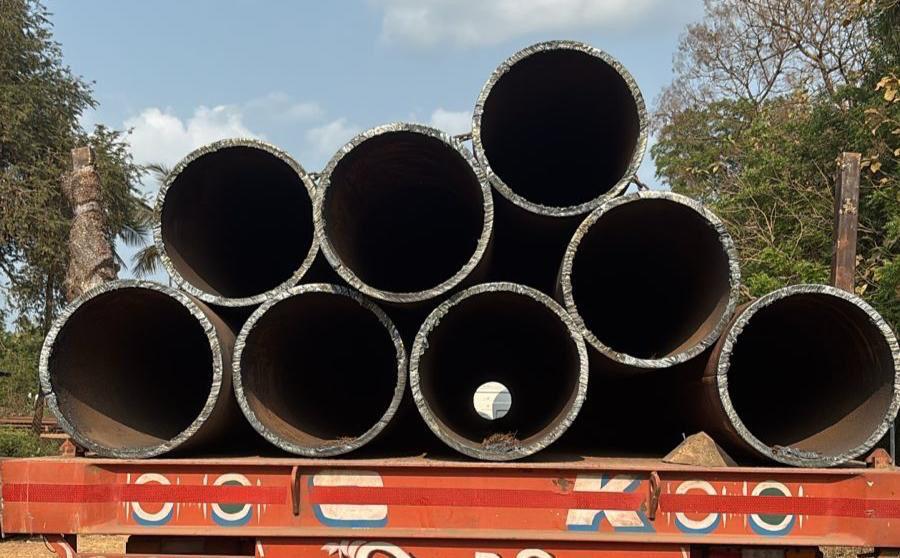 | Seamless Pipes We supply MS/CS seamless pipes for customers seeking seamless pipe solutions for industrial and project requirements. View product → |
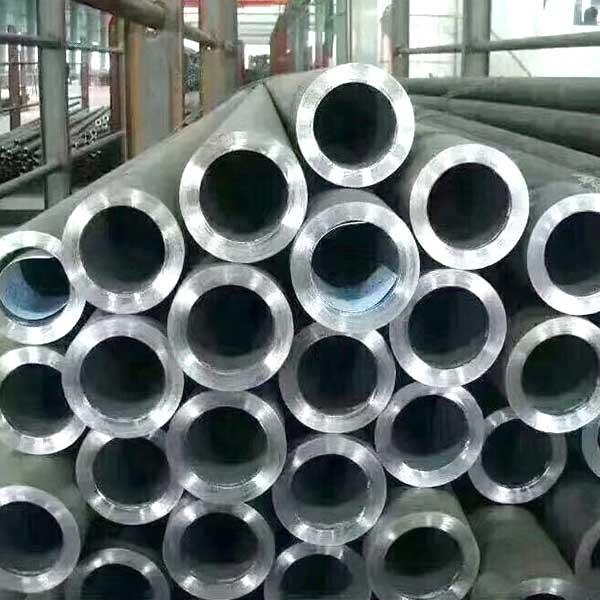 | Alloy Steel Pipes & Products We supply alloy steel pipes as part of our alloy steel product range for industrial and project sourcing requirements. View product → |
 | Seamless Tubes We supply seamless tubes as part of our industrial pipe and tube range. View product → |