A reliable piping purchase starts with the service, not the stock list: pressure, temperature, fluid, corrosion exposure, flow rate and installation conditions determine the product you need. By the end, you will be able to write an unambiguous pipe specification, compare standards and manufacturing routes, and check whether a supplier’s documents prove that the delivered material matches your design.
Key takeaways
- Specify pressure, temperature, fluid composition and corrosion risk before choosing pipe.
- Confirm outside diameter, wall thickness, length and schedule—not nominal size alone.
- Match the grade, standard and manufacturing route to the service and fabrication method.
- Request heat-specific test records and compare them with the purchase specification.
Choose the Pipe Around the Service Conditions
A pipe is selected from service conditions, not nominal size alone. Record the fluid or gas composition, operating pressure, design pressure, temperature range, flow rate, corrosion or erosion risk, and indoor or outdoor exposure. For structural work, replace fluid data with axial load, bending, buckling, connection method and fire exposure.
| Application | Starting specification | Check before approval |
|---|---|---|
| Clean water, air or general pressure service | ASTM A53 welded or seamless steel pipe | Confirm grade, wall thickness, end preparation and corrosion protection |
| High-temperature pressure service | ASTM A106 seamless carbon-steel pipe | Check design temperature, allowable stress, heat treatment and test records |
| H₂S-containing oil or gas service | Material qualified under ISO 15156/NACE MR0175 | State H₂S environment, hardness limit and sulfide-stress-cracking requirements |
| Structural hollow section | ASTM A500 or EN 10219 | Use the structural design code; do not substitute it for pressure pipe |
Schedule is a dimensional designation, not a universal pressure rating. A heavier Schedule 80 wall can still fail the design basis if the grade, temperature, weld efficiency, corrosion allowance or outside diameter is wrong.
Choose seamless pipe when the specified standard and design require it; choose welded pipe when its weld quality, nondestructive examination and economics satisfy the design.
Give an industrial steel pipe supplier a complete specification: standard and grade, nominal size, wall thickness or schedule, length, ends, heat treatment, quantity and required certification. Treat “hydrotested” as incomplete unless the certificate identifies test pressure, duration and acceptance basis.
Read Pipe Dimensions Correctly Before You Order
Start with the designation, not a tape measure. Nominal pipe size (NPS) identifies a pipe family; it is not the measured outside diameter. NPS 2 Schedule 40 has an outside diameter of 2.375 in (60.3 mm), while its schedule sets the nominal wall thickness.
The inside diameter is approximately the outside diameter minus twice the wall thickness, subject to manufacturing tolerance.
1. Choose the inside diameter for flow, velocity and cleaning access, then check that the wall thickness supports pressure, corrosion allowance and loads. Do not treat schedule as a universal pressure rating; grade, temperature, weld efficiency and design code also control allowable pressure.
2. Select fittings, flanges and valves against the pipe’s dimensional standard, not an assumed measured NPS. A nominal size interpreted as the actual diameter can leave you with incompatible connections.
3. Put the complete dimension on the order: standard, grade, NPS, schedule or specified wall thickness, length, end preparation, quantity and any minimum delivered wall requirement. State the minimum wall explicitly when corrosion could consume the allowance.
| Item | Pipe | Tube |
|---|---|---|
| Sizing | NPS and schedule or wall thickness | Actual outside diameter and wall thickness |
| Typical use | Pressure, process and utility lines | Heat exchangers, fabrication and structural sections |
| Ordering risk | NPS 2 does not mean 2 in OD | “Steel tube” without OD, wall, grade and tolerance is incomplete |
Confirm structural hollow sections such as ASTM A500 or EN 10219 against the design code before using them in a pressure boundary.
Match the Standard, Grade and Manufacturing Route
Specify the product standard, grade and manufacturing route together: “carbon steel pipe” leaves pressure rating, temperature capability, weld construction and inspection basis unresolved. Use a pressure-pipe standard for a pressure boundary, a structural-hollow-section standard for load-bearing frames, and a tube specification for heat-transfer equipment.
| Service | Standard and grade direction | Manufacturing route |
|---|---|---|
| Pressure or moderate-temperature utility service | ASTM A53 Grade B; black or hot-dipped galvanized, welded or seamless | Select the route permitted by the design and require the specified weld examination |
| High-temperature carbon-steel pressure service | ASTM A106 Grade B or C | Seamless pipe; confirm design temperature, heat treatment and test basis |
| Heat-exchanger or condenser tubes | ASTM A179 | Seamless, cold-drawn tube; specify tube dimensions and tube-side requirements |
| High-temperature alloy-steel pressure service | ASTM A335, such as P11 or P22 | Seamless alloy pipe; match chromium-molybdenum grade to the design code |
| Structural hollow sections | ASTM A500 Grade B or C, or EN 10219 S235/S355 | Structural tube; do not substitute it into a pressure boundary without approval |
Do not treat seamless as automatically stronger or more corrosion-resistant. Welded pipe is acceptable when its weld quality, nondestructive examination and product standard meet the design basis. State the required minimum wall or corrosion allowance, because nominal wall tolerances can leave less metal than the printed value.
A schedule is only a dimensional designation, not a universal pressure rating; confirm grade, temperature, weld efficiency and code calculations.
Balance Corrosion Protection, Fabrication and Installed Cost
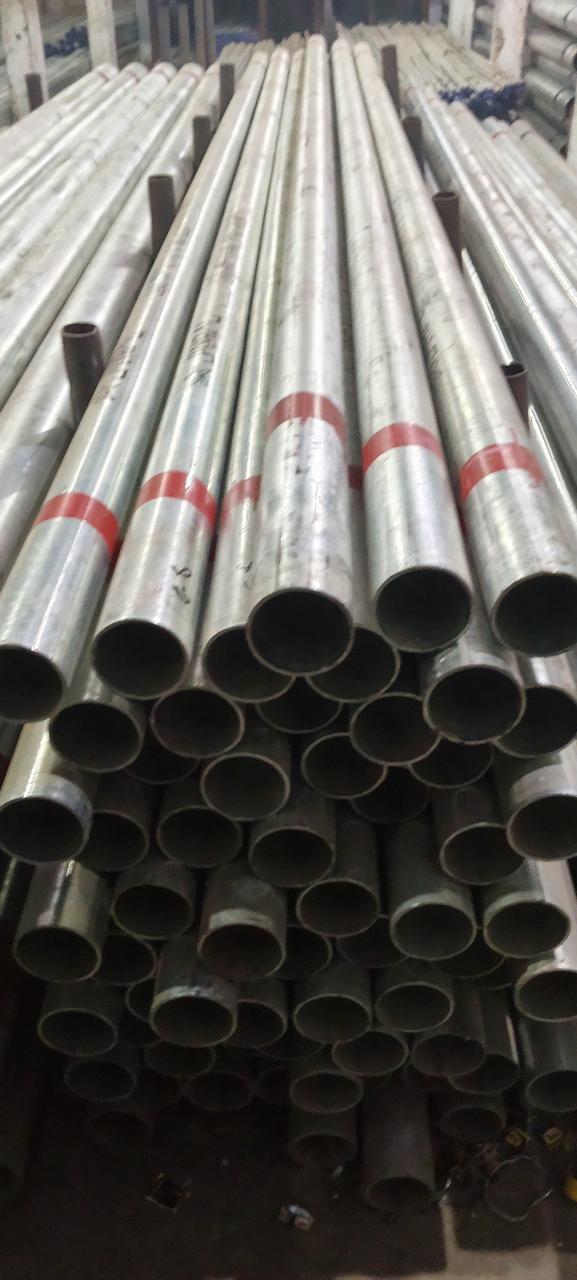
Galvanized steel pipe suits outdoor water, air and light-duty utility lines where a zinc coating can delay atmospheric corrosion. Do not assume it will survive buried soil, H₂S, strong acids or high heat; confirm coating compatibility with threading, welding, bending and field repair.
| Option | Best use | Main cost or fabrication warning |
|---|---|---|
| Galvanized steel pipe | Outdoor, non-aggressive water and utility service | Coating damage at cuts and welds needs repair; zinc is not a universal chemical barrier |
| Mild steel | Low-pressure structural, air, water and fabrication work | Mild steel versus carbon steel is mainly a low-carbon commercial distinction; specify the grade and standard, not “mild” alone |
| Carbon steel | Pressure piping with defined temperature, strength and corrosion allowance | Black pipe needs a coating, lining or corrosion allowance when the environment demands it |
| Alloy steel | Elevated-temperature, creep or oxidation-sensitive service | Alloy steel temperature capability can justify its price in hot service; do not pay for alloying when design temperature does not require it |
| Welded pipe | Larger diameters and ordinary pressure or structural service | Usually lowers material cost, but check weld quality, nondestructive examination and weld efficiency |
| Seamless pipe | High-temperature or demanding pressure service where the specification requires it | Costs more and is not automatically stronger or more corrosion-resistant |
For welded versus seamless pipe, compare the complete installed cost: cutting, beveling, welding, inspection, coating, supports and outage risk. ASTM A106 seamless carbon steel fits high-temperature service; ASTM A53 welded or seamless pipe fits specified mechanical and pressure applications. A heavier schedule cannot correct the wrong grade or design temperature.
Verify the Offer With Heat-Specific Records
Request evidence that ties every piece to a defined heat, not a generic statement that the pipe is compliant. A material test certificate must identify the manufacturer, product standard, grade, dimensions, heat number, chemical analysis and mechanical test results.
Prefer an EN 10204 Type 3.1 certificate issued by the manufacturer over a distributor’s certificate of conformity.
1. Match the heat number on the pipe marking or bundle tag with the certificate and delivery note. This is heat number traceability; a mismatch breaks the audit trail before fabrication begins.
2. Ask for the applicable hydrostatic test pressure, test duration and acceptance criteria, plus the recorded result. “Hydrotested” alone is incomplete because the product standard determines the test basis, and the test does not verify your design or future in-service condition.
3. For cut lengths, demand a release record linking each piece or remnant to its original heat number, grade, standard, dimensions and certificate. When a stockist splits a bundle without preserving this link, identical-looking pieces become unusable for a controlled fabrication job.
4. Use positive material identification PMI for stainless and alloy pipe. Handheld X-ray fluorescence can screen alloy chemistry, but it may not measure carbon accurately enough to distinguish every grade or confirm weldability; use optical-emission spectroscopy or laboratory analysis when carbon matters.
Vikram And Company can be asked to preserve this documentation when supplying mixed-size stock, especially alloy steel. For sour service, also request evidence against ISO 15156/NACE MR0175, including hardness and qualification records for the actual H₂S environment.
Related products
 | GI Pipes We supply GI round pipes as part of our range of galvanized iron piping solutions for industrial and project requirements. View product → |
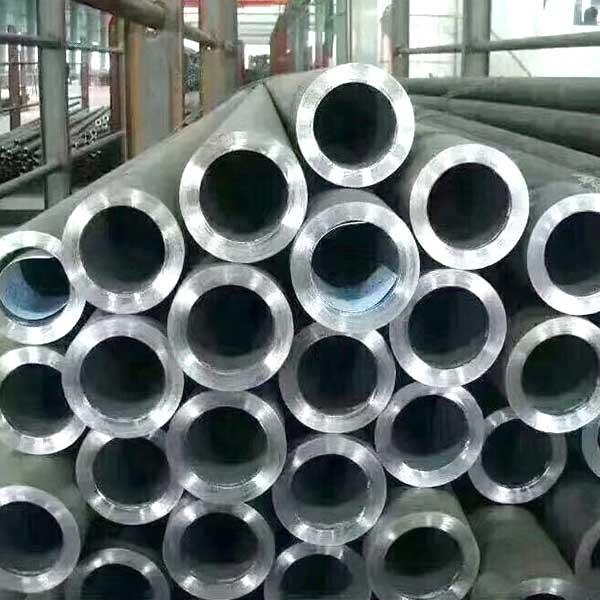 | Alloy Steel Pipes & Products We supply alloy steel pipes as part of our alloy steel product range for industrial and project sourcing requirements. View product → |
Frequently asked questions
What service conditions should determine industrial pipe selection?
Record fluid or gas composition, operating and design pressure, temperature range, flow rate, corrosion or erosion risk, and indoor or outdoor exposure. For structural work, assess axial load, bending, buckling, connection method and fire exposure.
Which pipe dimensions must you confirm before ordering?
Confirm the outside diameter, wall thickness or schedule, pipe length, end finish and dimensional tolerances. Nominal pipe size does not by itself identify the actual outside diameter or wall thickness.
Why do the pipe standard, grade and manufacturing route matter?
The standard defines dimensions, testing and acceptance requirements; the grade defines chemical and mechanical properties; and the manufacturing route affects weld location, consistency and suitability for fabrication and service.
How do you verify a steel pipe offer before purchase?
Compare the quotation with the specification and request heat-specific records, including the heat number, chemical analysis, tensile results, yield strength, elongation, hydrostatic test result and any specified non-destructive testing.
Related products
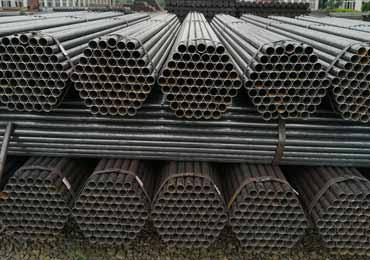 | MS Pipes We supply mild steel round pipes for industrial and project-related sourcing requirements. View product → |
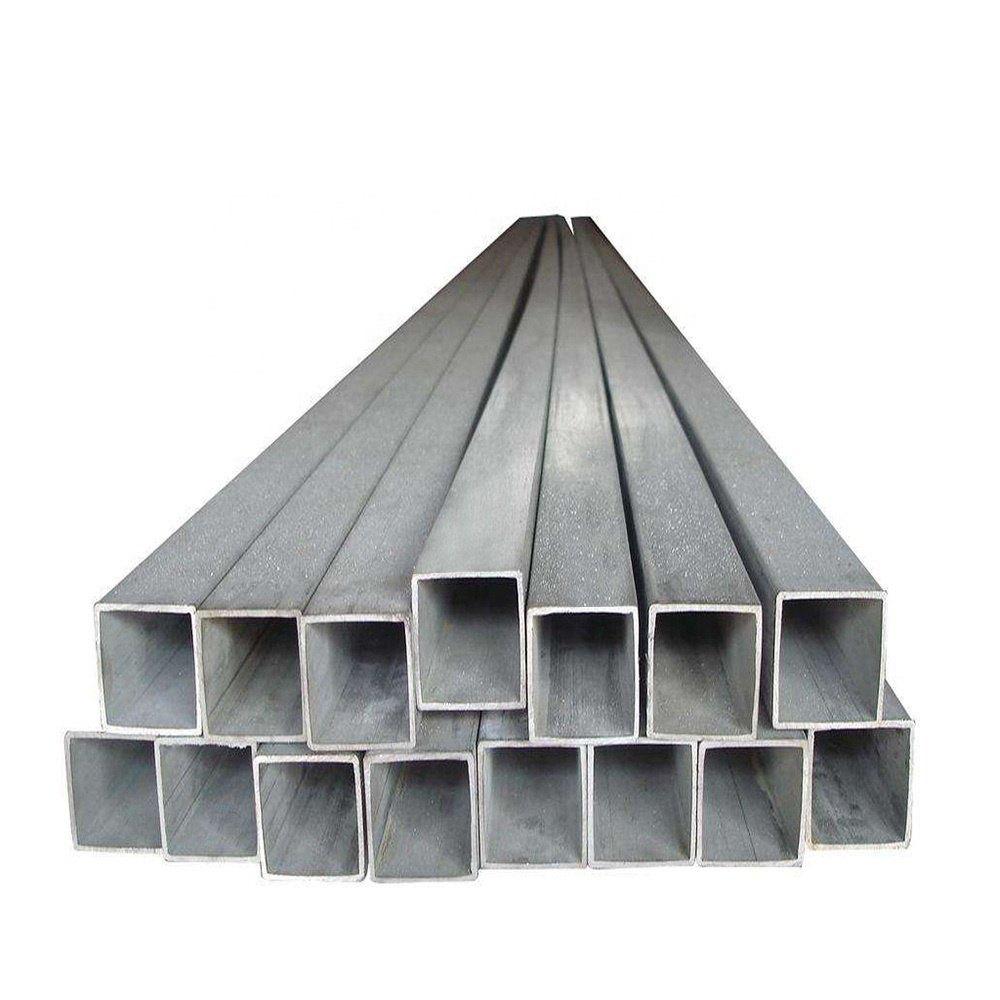 | GI Pipes We supply GI square pipes as part of our galvanized iron pipe range for businesses seeking dependable industrial piping solutions. View product → |
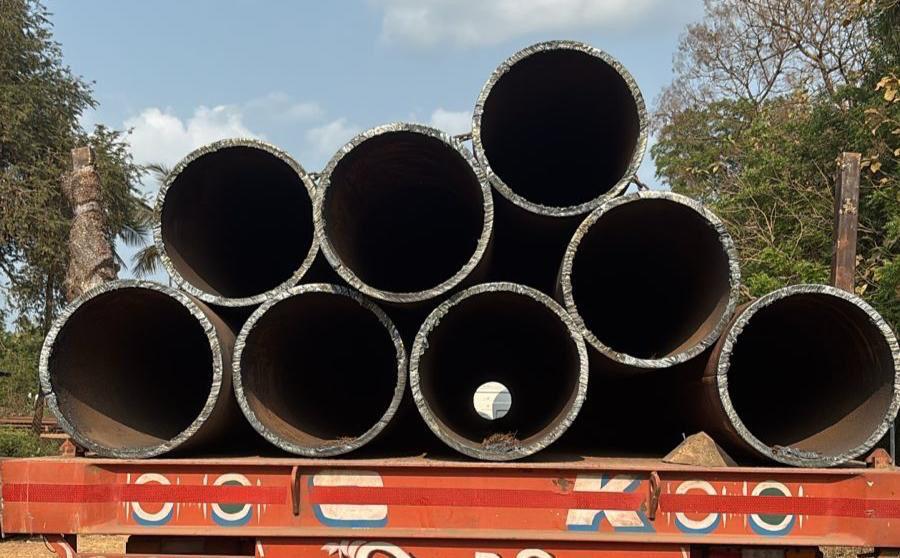 | Seamless Pipes We supply MS/CS seamless pipes for customers seeking seamless pipe solutions for industrial and project requirements. View product → |
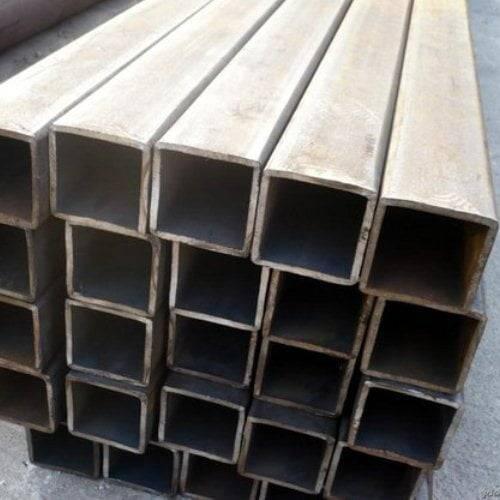 | MS Pipes We supply mild steel square pipes as part of our MS piping range for industrial, commercial, and project sourcing requirements. View product → |